




Newsletter  | March 2025


                                                    ☀  JVL Wildcat Monthly Newsletter: MARCH 2025 

 Image  Image
 Image  Image

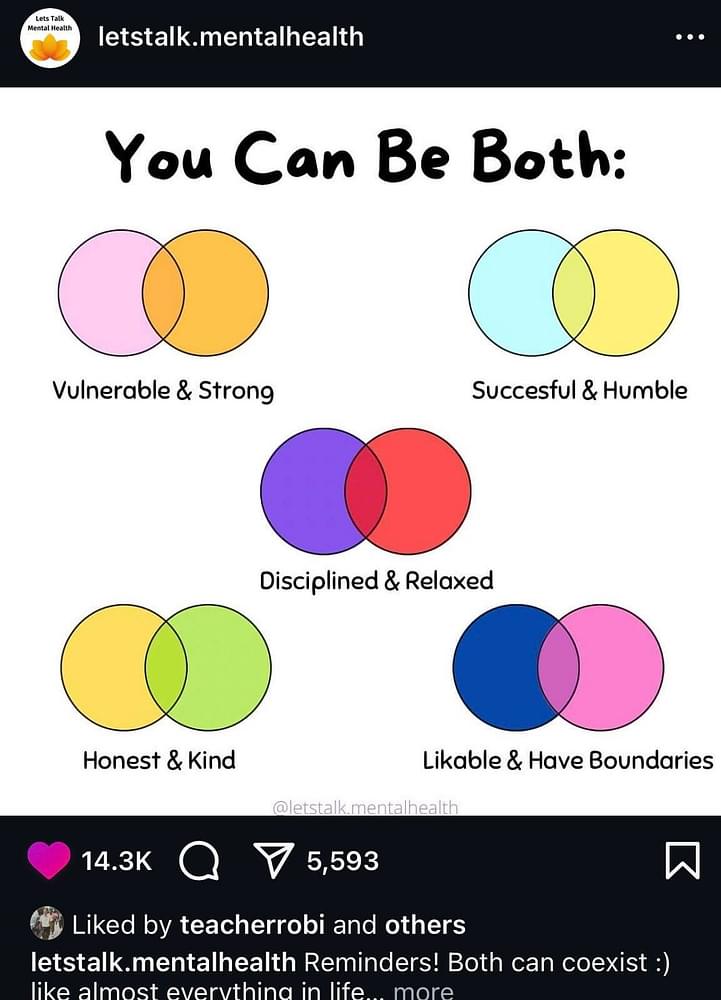
Instagram Post Highlight

 Image  Image

Alumni Spotlight: HEAVEN SAXON 


Heaven graduated JVL Wildcat in 2023. She is currently working in the healthcare field as a patient care technician in a hospital. She greets patients, draws blood, does EKGs, and helps bed-bound patients. Heaven aspires to soon go to nursing school and  become a nurse practitioner.  On top of this, she wants to pursue a law degree and start her own organization. Her organization is inspired by her father and will be dedicated to helping incarcerated individuals navigate the legal system.


Heaven is most proud of:  

Her siblings because they are the reason she is here today. Although she is the youngest, she looks up to her older siblings.  Her sister is the reason she stayed in high school despite her struggles.  Her siblings make her feel proud to be in the healthcare field and to be breaking generational curses. 


Heaven's best Wildcat memory:  

GRADUATION.  Standing on the stage was an amazing feeling.  Looking around she saw all her friends and teachers who supported her and cheered her on. She realized here what a great support system she made at Wildcat.  Even if teachers or mentors weren't always present, she always had someone to rely on. Standing on the stage and seeing everyone's supportive faces made her feel so happy! She still has that support now and couldn't be more grateful.


Heaven's advice for current Wildcats:  

"Use the support the school gives you! Even for the most independent people: It is important to RECOGNIZE WHEN YOU NEED HELP, and IT IS OKAY TO ASK FOR HELP! Use the teachers and support staff if you ever feel alone. Take it day by day. If you just focus on the end of the day and pushing through, you will make it there! Keep going, keep pushing!"


FUN FACT:  Heaven is a HUGE animal lover. She has 5 dogs and a turtle! :) 


Emotions & Individual Differences Shape Human Foraging Under Threat

 Nature Mental Health, Mar 2025


How Emotions and Personality Shape Our Decisions Under Pressure

Imagine you’re rushing into a busy supermarket to grab groceries while dodging traffic. Your brain is juggling two goals: getting what you need (reward) and staying safe (avoiding threats). This everyday scenario mirrors a fundamental survival challenge humans share with animals: the constant trade-off between seeking rewards and avoiding danger. A recent study published in Nature Mental Health sheds light on how our emotions and individual traits influence this delicate balance and what it means for understanding mental health.

Implications for Young Adults: Navigating Uncertainty in a High-Stakes World

The study’s virtual foraging task isn’t just a game, it’s a microcosm of the high-pressure, reward-driven world young adults face daily. From academic deadlines to career pivots, social media comparisons to financial stress, the balance between chasing goals and avoiding pitfalls is relentless.  Here's how these findings connect to The Young Adult's reality-and how to leverage them for resilience.

Researchers designed an online game where participants played as a fish navigating an underwater world. The goal was simple: collect as much food (reward) as possible while avoiding predators. Players could choose to:


  1. Forage for food.

  2. Check surroundings for threats.

  3. Hide in a safe zone.


Over 1,000 participants played this game, revealing fascinating insights into how stress, excitement, and personality traits shape decision-making.


Key Findings: Emotions Drive Behavior

Stress Triggers Action—and Relief :
  • When stressed, people instinctively adjusted their behavior: they foraged more or hid sooner. This “stress-driven” behavior actually
     lowered their stress levels afterward, suggesting we subconsciously use actions to regulate emotions.
    Think of it as a mental thermostat: when stress rises, we seek comfort in familiar or safer actions

  • Excitement Fuels Momentum:
    Excitement had a different effect. Feeling energized made participants act faster and more boldly, creating a “positive feedback loop.”

  • However, this link was weaker than stress responses, hinting that threat avoidance might dominate our instincts under pressure.

  • Personality Matters: Traits Predict Performance

    The study also explored how individual differences influenced gameplay:

    • Gender Differences: Women checked for threats more often and foraged less, which paradoxically led to more “virtual deaths.”
      This aligns with broader research suggesting gender differences in risk assessment, though societal or biological factors need
       deeper exploration.

    • Anxiety and Overchecking: People with anxiety-related traits (e.g., compulsive checking) spent too much time scanning
       for threats in disorganized ways, harming their performance. Ironically, those with high somatic anxiety (physical symptoms
       like a racing heart) avoided checking in because it felt overwhelming, a cycle that left them vulnerable

    • The Surprising Upside of Apathy: Counterintuitively, participants with apathy (reduced motivation) performed better by focusing on foraging and avoiding excessive checks. This suggests that in some contexts, “tuning out” distractions engagement.

    • Anhedonia and Disconnection: Those with anhedonia (inability to feel pleasure) can boost efficiency, though it may come at the cost of reduced emotional reported less excitement during the task and felt disconnected from the game, yet their behavior was more driven by high rewards. This paradox highlights the complexity of motivation in mental health conditions like depression.

    • Implications for Young Adults: Navigating Uncertainty in a High-Stakes World

      The study’s virtual foraging task isn’t just a game, it’s a microcosm of the high-pressure, reward-driven world young adults face daily. From academic deadlines to career pivots, social media comparisons to financial stress, the balance between chasing goals and avoiding pitfalls is relentless.  Here's how these findings connect to The Young Adult's reality-and how to leverage them for resilience.

      Stress: Your Secret Weapon for Momentum

      Stress isn’t always the enemy—it can be fuel.

      In the game, stressed players turned to action (foraging or hiding), which lowered their stress. For young adults juggling internships, exams, or side hustles, this mirrors a critical lesson: small wins matter. When anxiety spikes, channel it into bite-sized tasks—reply to one email, draft a resume bullet, tidy your room. These micro-actions rebuild agency in a chaotic world. But remember: Life’s “predators” (like burnout) aren’t as predictable as pixelated fish. Schedule intentional pauses to avoid trading short-term productivity for long-term exhaustion.


Anxiety: Break the “What If” Cycle

Overthinking is a trap—action is the exit.
Anxious players checked threats obsessively but inefficiently, mirroring the paralysis of endless “what ifs” in real life (What if I pick the wrong major? What if I’m not good enough?). The game’s lesson? Set a timer for decision-making. Research options, then commit. In a world of infinite choices (careers, relationships, identities), waiting for certainty is a myth. Embrace “good enough” decisions—they’re often the ones that propel growth.


Apathy: When Hustle Culture Backfires

Detaching from emotions might boost productivity—but at a cost.
Apathetic players thrived by ignoring threats and hyper-focusing on rewards. Sound familiar? Grinding through gigs or exams while numbing stress might work short-term, but it risks hollowing out joy and curiosity. Ask yourself: Am I chasing goals because they matter to ME, or because I’m on autopilot? Burnout isn’t a badge of honor. Reconnect with what excites you even if it’s as simple as a hobby or a walk without headphones.


Anhedonia: Reclaiming Emotional Engagement in a Digital Age


High dopamine tasks are payday loans for your brain—they give instant cash but bury you in interest


Anhedonia, characterized by diminished pleasure, often leaves young adults navigating achievement-oriented cultures feeling emotionally disconnected. Passive digital consumption such as excessive social media scrolling can increase this detachment by prioritizing fleeting dopamine-driven engagement over meaningful experiences. Clinically informed strategies like behavioral activation emphasize intentional, sensory-rich activities (creative expression, physical movement, or purposeful offline interactions) to counteract numbness. By replacing autopilot screen time with deliberate, fulfilling activities, individuals can reset their reward systems, fostering sustained emotional engagement and reclaiming agency over their well-being.


The virtual fish faced predictable predators. Your world? It’s wilder, messier, and infinitely more beautiful. But just like the game, every choice shapes your story. The goal isn’t to avoid threats entirely. It’s to play with courage, curiosity, and the humility to hit “pause” when the screen blurs. After all, life’s greatest rewards often lie just beyond the edge of your comfort zone.


Curious what's happening in NY schools? You can read more here.

-

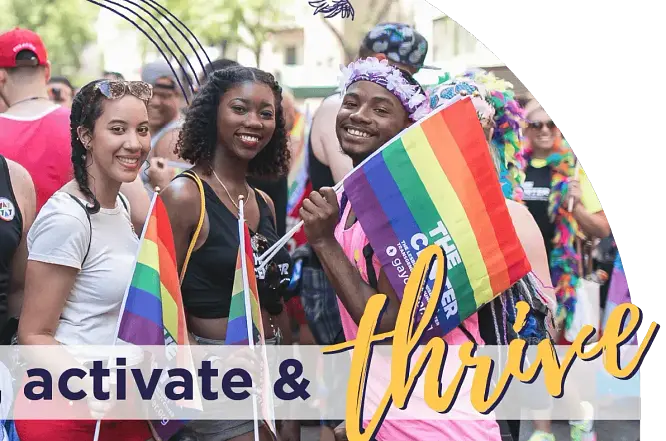
Resource of the Month: THE CENTER

https://www.gaycenter.org


Image


NYC LGBT Community Center – Identity-Based Groups

● What they do: Provide free or low-cost, peer-led support tailored to the

intersectional challenges faced by LGBTQ+ individuals, prioritizing those often

marginalized within broader queer spaces. These include specialized groups for

transgender and nonbinary youth navigating gender identity and systemic

barriers, queer people of color confronting racism within and outside the

community, HIV+ individuals addressing medical stigma, and older adults

combating isolation in aging. Unlike conventional therapy, these sessions—often

facilitated by those with shared lived experiences—blend dialogue with creative

and activist elements, such as art workshops or harm-reduction strategies for

substance use. 

The Center emphasizes accessibility: no insurance, fees, or

referrals are required, and services extend to undocumented individuals or those

hesitant about clinical settings. The Center is a safe spaces to discuss intersectional struggles (e.g., racism in

queer communities).


SERVICES:

HEALTH SERVICES 

HIV SERVICES  

SUBSTANCE USE TREATMENT 

INSURANCE ENROLLMENT ASSISTANCE

YOUTH DROP-IN CENTER 

YOUTH SUBSTANCE RECOVERY 

CAREER SERVICES 

COMMUNITY CASEWORK 

COUNSELING


                                       GAYCENTER.ORG 

208 W 13th St, 

New York, NY 10011 (West Village)

                                       CALL: 212-620-7310


Learn more

NEWSLETTER CREATED FOR YOU BY:

NICOLE BOGUTSKY, JVL WILDCAT MHC-LP (646) 516-0422 - nbogutsky_SCT@jvlwildcat.org

Anoosha Banerjee, The City College of NY Practicum Mental Health Counseling Student - anooshkabanerjee@gmail.com

Samantha Meltsner, Hunter Practicum Mental Health Counseling Student - samantha.meltsner@gmail.com


In order to be featured in the monthly newsletter, be sure to attend classes at least 80% of school days during the month.